
'Slipped' Discs - Myth Busting
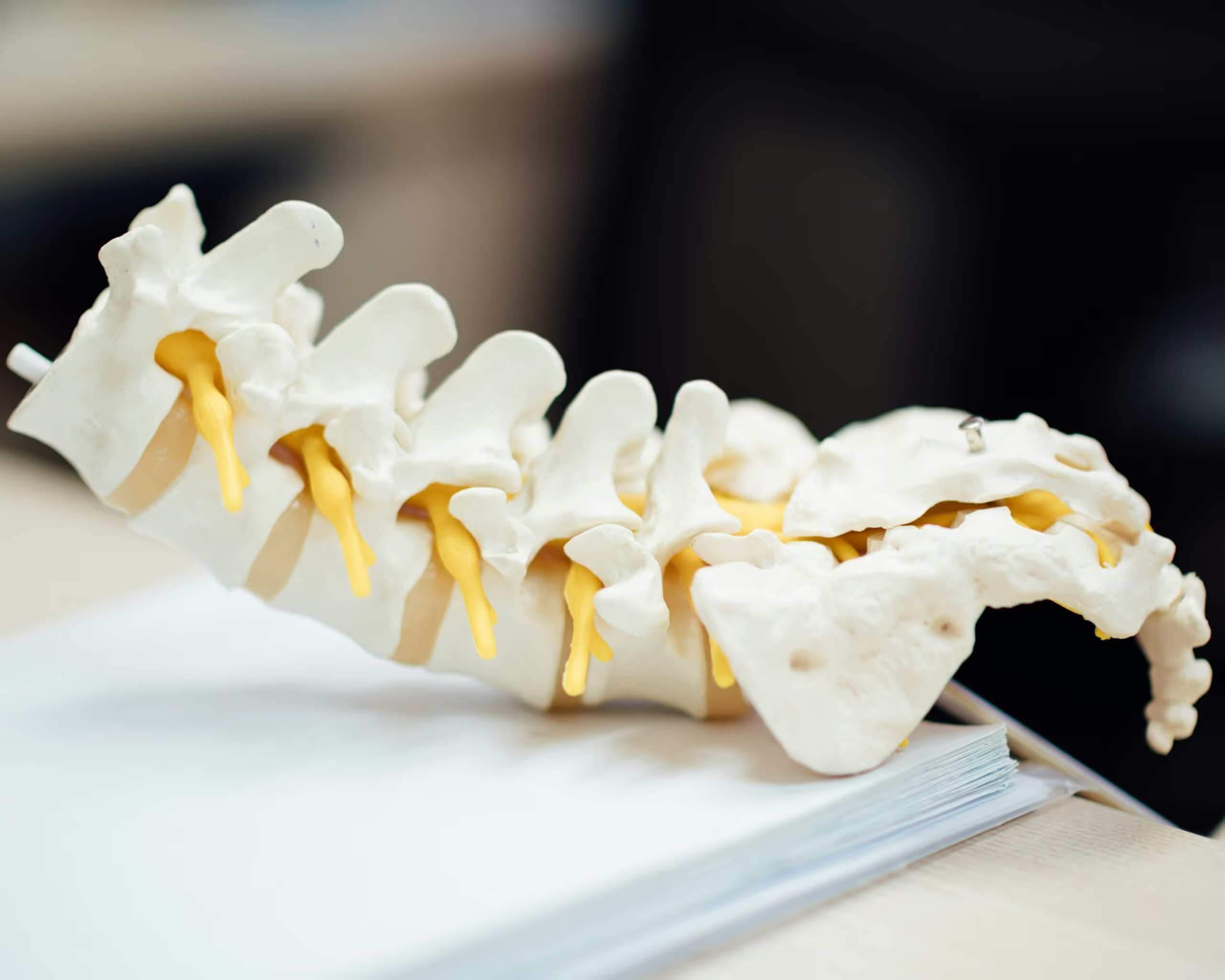
We all know someone with a “slipped disc,” and it’s likely you’ve heard some common myths about this condition. Let’s separate fact from fiction and bring clarity to this topic.
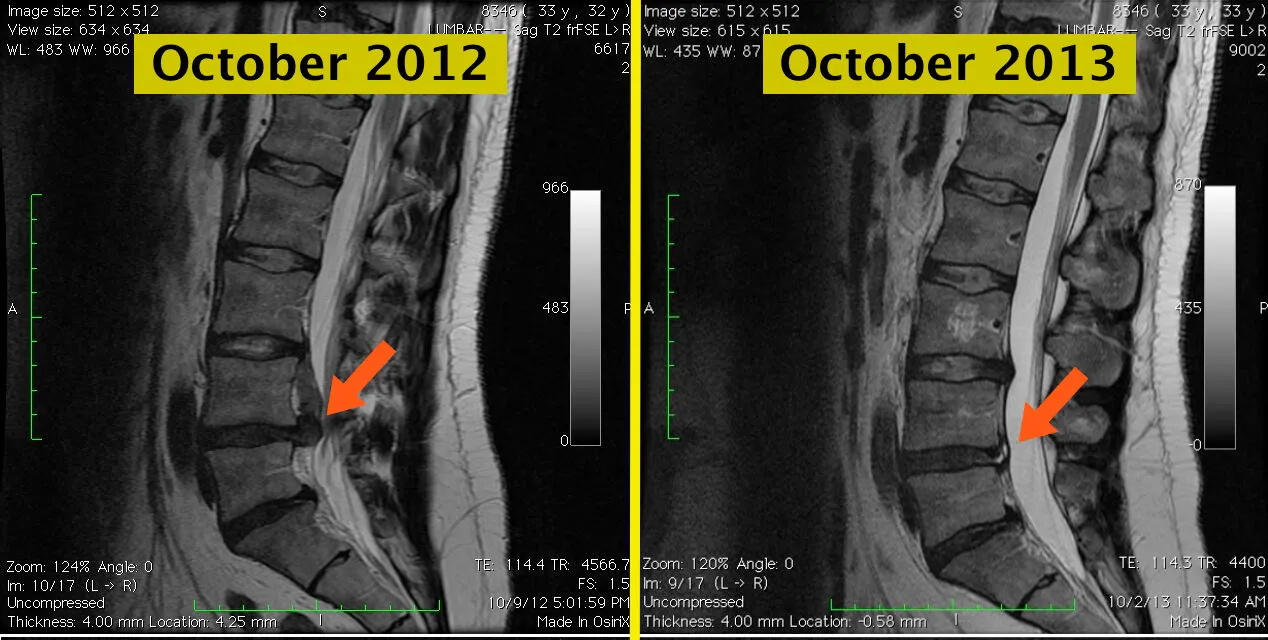
Image source: thepainsource.com - auto-resorption of lumbar disc herniation
Myth #1: You Need Surgery to Fix It
The truth is, most cases of a herniated or “slipped” disc do not require surgery. Current guidelines recommend at least six weeks of conservative management, including manual therapy, gentle exercise, and pain management. During this time, pain often improves significantly without surgical intervention (Foster et al., 2018).
Myth #2: Surgery Will Fix It
While surgery might provide faster pain relief in some cases, studies show that conservative treatment can be just as effective after one year. For many patients, non-surgical approaches are a viable and successful option (Weinstein et al., 2010).
Myth #3: You’re Stuck with It Forever
Lumbar discs have a remarkable capacity to heal. Research shows that herniated discs can be reabsorbed by the body within nine months, with significant reductions in size over time (Chiu et al., 2017; Kjaer et al., 2018).
Myth #4: A Disc Bulge Is the Reason You’re in Pain
Interestingly, disc bulges are not always the culprit. Research shows that about one-third of healthy, pain-free 20-year-olds have disc protrusions without any symptoms (Brinjikji et al., 2015). This highlights the complexity of back pain and the importance of a thorough assessment.
Myth #5: Discs Can Slip
Despite the term “slipped disc,” discs cannot actually slip in and out of place. They are firmly anchored by strong ligaments and bones. While a part of the disc can bulge or herniate, the disc itself remains securely in position.
By understanding these myths, you can feel more confident about managing back pain and making informed decisions about your care. If you’re experiencing discomfort or have any questions, our team at Baseline Osteopathy is here to help.
Book an appointment with Baseline Osteopathy.
References
Brinjikji, W., et al. (2015). Prevalence of lumbar spine MRI findings in asymptomatic individuals. American Journal of Neuroradiology, 36(4), 811-816. PubMed ID: 25430861
Chiu, C. C., et al. (2017). Natural history of lumbar disc herniation. European Spine Journal, 26(5), 1114-1122. PubMed ID: 28072796
Foster, N. E., et al. (2018). Current evidence-based guidelines for conservative management of lumbar disc herniation. Lancet, 391(10127), 2556-2571. PubMed ID: 29174459
Kjaer, P., et al. (2018). Lumbar disc resorption and clinical recovery. The Spine Journal, 18(3), 494-500. PubMed ID: 30610984
Weinstein, J. N., et al. (2010). Surgical vs. nonoperative treatment for lumbar disc herniation. Journal of the American Medical Association, 303(13), 1259-1265. PubMed ID: 20949289